Turn It Up, It Tastes Better: Inside the Breweries Scoring Their Beers Like Films
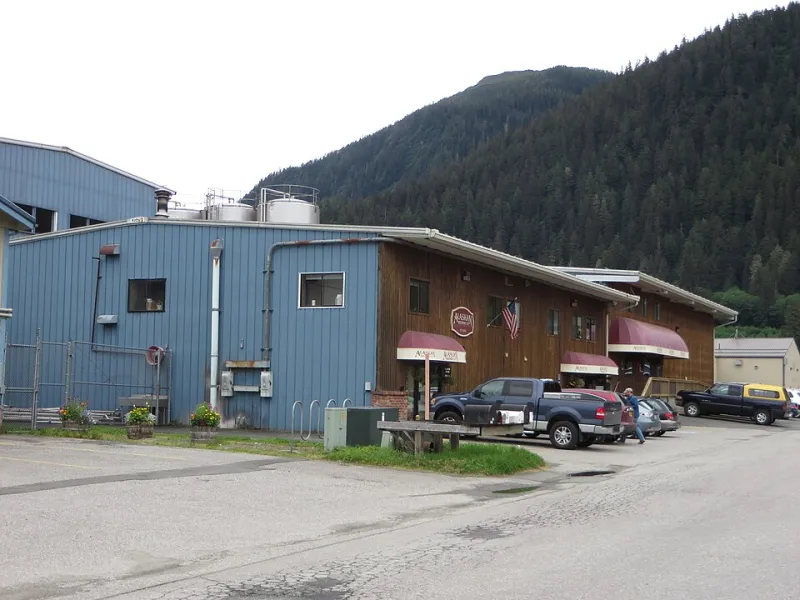
Photo: Bernt Rostad from Oslo, Norway, CC BY 2.0, via Wikimedia Commons
Here's an uncomfortable question for beer snobs: how much of what you taste is actually coming from your ears?
More than you'd like to admit, according to a growing movement of American breweries that have stopped treating music as taproom wallpaper and started treating it as an ingredient. These are places where the house IPA has an official soundtrack, where a stout drop comes with a curated lo-fi listening room, and where the brewer can tell you the BPM of the playlist that played during fermentation. It sounds like marketing nonsense. It mostly isn't.
The Science Nobody Ordered But Everyone Got
The research here is older and weirder than most people realize. Studies going back to the early 2000s — most famously the work of Oxford's Charles Spence — have shown that sound measurably alters taste perception. High-pitched tones enhance sweetness and sourness; lower frequencies amplify bitterness and richness. In one oft-cited experiment, participants rated the exact same toffee as creamier when played with a deeper soundtrack.
Spence calls this phenomenon "sonic seasoning," and breweries have caught on. If bitterness can be turned up with a bassline, then a hop-bomb IPA paired with bright, percussive Afrobeats isn't a gimmick — it's flavor engineering.
"Taste is maybe 20 percent tongue," explains Dana Whitfield, a Chicago-based sensory marketing consultant who's worked with beverage brands for over a decade. "The rest is context: light, temperature, expectation, and yes, absolutely, sound. A brewery that scores its beer is doing what film composers do — telling your brain how to feel before the flavor lands."
Whitfield's advice to clients is blunt: "If your taproom playlist is whatever the beertender feels like that day, you're leaving flavor on the table. Literally."
The Five Doing It Best
Not every brewery attempting this lands it. The good ones commit; the bad ones just make a Spotify playlist and call it a day. Here's our ranking of the American breweries actually pulling it off:
1. Dogfish Head — Milton, Delaware. The OG of music-beer crossover, and still the standard. Their lineup is practically a discography, with beers inspired by — and brewed alongside — specific artists and live sessions recorded on-site. No one blends the two cultures more naturally.
2. Half Acre — Chicago. Their taproom programming treats sound like a brew day schedule: specific genres assigned to specific pours, with rotating listening events that feel more like a record store hang than a bar night.
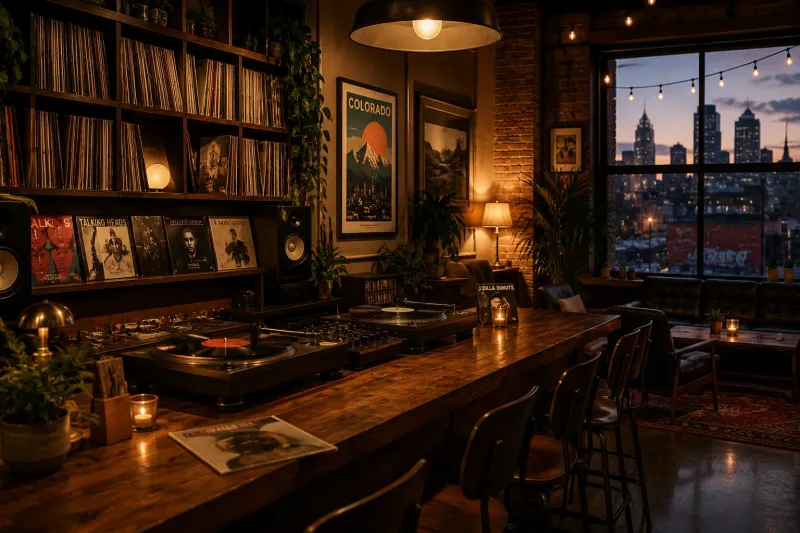
3. Bearwalker Coffee & Brewing — Los Angeles. Their coffee-stout hybrid gets a dedicated lo-fi listening room — dim lighting, warm speakers, zero TVs. It's the closest thing to a sensory isolation tank in American brewing.
4. J. Wakefield Brewing — Miami. Lean into the local: hop-forward releases paired with Latin and Afrobeats-leaning playlists that match the beer's bright, punchy profile. The pairing logic is genuinely thoughtful, not decorative.
5. Modern Times — San Diego. Long known for treating their taprooms like retro-futurist listening lounges, with obsessive curation down to the vinyl selection behind the bar.
Why It Works (and When It Doesn't)
The skeptic's take is fair: a lot of this is branding dressed up as science. But the core insight holds — context shapes flavor, and music is the cheapest, most controllable piece of context a taproom has. A stout genuinely does drink heavier in a low-lit room with a slow, bass-heavy soundtrack. A crisp pilsner genuinely does taste brighter with something uptempo in the air.
Where breweries fail is when the pairing is purely thematic — slapping a playlist on a can label without thinking about how the sound actually interacts with the liquid. Whitfield's rule of thumb: "Match the texture, not the vibe. A juicy hazy wants bright, airy frequencies. A barrel-aged imperial wants depth and space. If your playlist choice wouldn't make sense as a tasting note, it's just noise."
So next time a pour tastes better than usual, don't just check the freshness date. Look up. Check the speakers.
Your drink might be playing you.