Draft Line Politics: The Invisible Battle for the Tap Behind the Stage
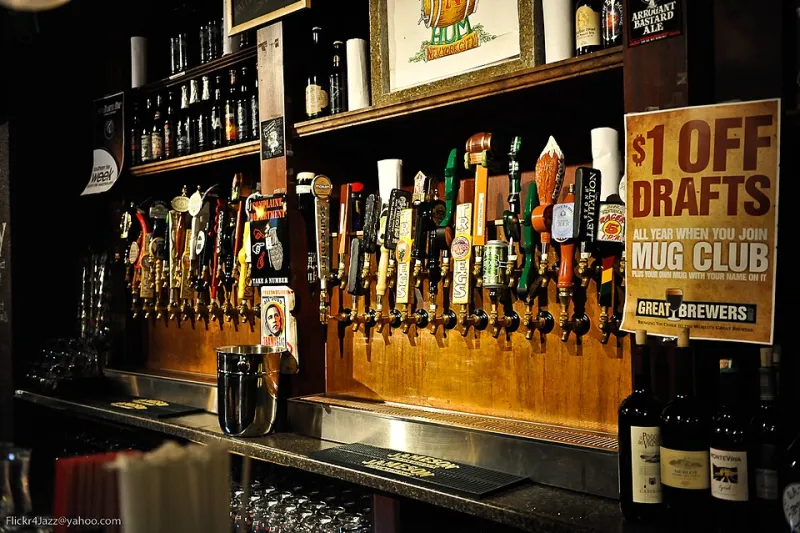
Photo: Jazz Guy from New Jersey, United States, CC BY 2.0, via Wikimedia Commons
The poster goes up three weeks out: national touring act, a couple of openers, the usual hype. What the poster doesn't show is the fight that happened months earlier — the one over the draft line.
At any mid-size American music venue, there are maybe eight to twelve handles behind the bar. One or two go to macro lagers because, let's be honest, somebody's ordering a Bud Light during the encore. The rest? That's contested territory. And unlike the booking calendar, there's no public record of how it gets decided.
The Pour Is a Booking Decision
"People assume the beer lineup just kind of happens," says a talent buyer at a 2,000-cap room in the Southeast who asked not to be named because, well, distributor relationships. "But it's negotiated like anything else. Pour guarantees, keg minimums, who supplies the cooler. It's a booking conversation that happens in a completely different meeting."
In most states, the three-tier system means venues don't just buy beer — they buy it through distributors, and those distributors have portfolios. If a venue's distributor reps a big craft brand, guess what's cold and available on load-in night. A small regional brewery without that muscle has to fight for attention one keg at a time.
Case Study: The 14-Month Climb
Take Hollow Fern, a fictional-but-very-real-feeling 12-person brewery outside Asheville, North Carolina. Their pilsner was already pouring at a dozen bars in town. Getting into the city's premier music hall took fourteen months.
Step one: they sponsored a free beer garden at a local festival the venue's GM attended. Step two: they kept a running tab of every bartender who mentioned liking their IPA. Step three — and this is the one nobody talks about — they made themselves easy. Small kegs, fast turnaround, flexible billing, zero drama when a tour's rider demanded the line be cleared.
"Venues don't want to think about beer," says Hollow Fern's sales lead. "They want to think about the show. If you're the brewery that never causes problems, you're the brewery that stays on the wall."
The breakthrough came when a mid-tier touring act — the kind that plays 1,500-seaters on a Thursday — name-checked the brewery in an interview. The venue's GM put two fingers of their pilsner on a temporary handle. It outsold the guest macro lager three to one. By spring, it was permanent.
What the Money Actually Looks Like
Here's the unglamorous math. A handle at a busy venue might move four to eight kegs a month. At craft wholesale pricing, that's real money for a small brewery — often the difference between a profitable quarter and a stressful one.
In exchange, venues get more than margin. Craft handles photograph well. They signal taste. And increasingly, festivals and concert promoters build beer partnerships into their sponsorship decks, sometimes locking in exclusive pours that can freeze out local brands entirely.
"A festival contract can make a brand," one distributor tells us. "Or it can teach a brewery that a single bad weekend with a warm walk-in cooler costs them two years of goodwill."
Why It Matters to You, the Person Holding the Cup
Every time you order something other than the obvious macro option at a show, you're casting a small vote. Venue managers track those pours obsessively — POS data doesn't lie. The pilsner that keeps outselling expectations keeps its handle. The one that doesn't gets swapped before the next national act rolls in.
So yeah, the lineup poster tells you who's playing. The draft board tells you who won. Next time you're in line during soundcheck, look up. Somebody lobbied hard for that tap.