Pour Decisions: The Beer Curators Running America's Best Music Venues
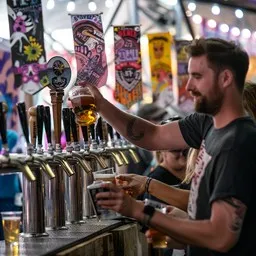
Photo: bartender pouring draft beer at a crowded concert venue bar with stage lights, via images.stockcake.com
The crowd files into the Fillmore-style theater in Denver forty minutes before doors, phones buzzing, merch line already snaking toward the balcony. Nobody notices the woman in the black hoodie walking the floor with a clipboard, crouching beside the corner tap tower, checking line pressure like a roadie checking a DI box.
Her name is Renata Cole. She's not in the band. She's not on the crew sheet. But if the beer program at this 1,800-cap room runs the way it should tonight — no dry taps by the encore, no fridge-bombed lagers, nothing on the board that clashes with the headliner — that's her work.
Cole is a venue beer coordinator, one of a growing class of behind-the-scenes pros who've turned what used to be a case-stacking afterthought into something closer to curation. Think of her as the person mixing the pre-show, except the medium is kegs.
Reading a Setlist Like a Tap List
The job starts weeks out, sometimes the moment a show is confirmed. Cole pulls up the act, scrolls fan forums, checks what the artist's crowd drank on previous tour stops. A bluegrass residency calls for something different than a warehouse techno night. A hip-hop headliner with a 21-and-up skew and a late start means slower, steadier pours — and a lineup that can survive three hours without palate fatigue.
"I had a rapper come through last spring and I put a crisp Czech-style pilsner front and center," she says. "Clean, snappy, doesn't fight with anything. It's the sonic equivalent of a tight kick drum. People drank it all night and nobody complained about heaviness between sets."
That's the level of intention involved: matching beer styles to sonic energy the way a lighting designer matches cues to tempo. Big, hazy double IPAs dominate on shreddy guitar nights. Easy-drinking Mexican-style lagers own the Latin indie bookings. Sour beers, she's learned, are a gamble on any bill — too polarizing to anchor a program, fun only as a one-tap wildcard.
The Math Nobody Claps For
The unglamorous half of the job is forecasting. Venues live and die on per-cap spend, and beer is the engine. Order too little and you're the person who sold out of everything by the second opener. Order too much and you're pouring expired kegs down the drain while the GM asks questions.
Cole keeps a running spreadsheet that factors in capacity, day of week, ticket price tier, weather (patio shows move roughly 30% more volume), and even openers — a buzzy support act can shift the crowd's arrival window by an hour. Sold-out shows on weekend nights might move a keg per 75 to 100 attendees. A Tuesday singer-songwriter gig? Cut that projection in half and add a bottle-heavy backup plan.
"Sound engineers get called artists now," she laughs. "I'd like the same respect for whoever made sure there were exactly enough lagers at 11:40 p.m."
Local Taps, Local Cred
There's also a civic layer. American music venues — especially the indie theaters and converted warehouses that anchor scenes in Austin, Portland, Philadelphia, and Asheville — have figured out that a local-heavy tap list does double duty. It supports the neighborhood brewery ecosystem, and it signals to touring acts and fans alike that the room gives a damn.
Some coordinators go further, running rotating "opener taps" that spotlight a different local brewery with each booking, effectively giving small producers access to thousands of thirsty concertgoers a night. A few rooms now print the beer lineup on the show poster, right under the bands. That's not an accident. That's programming.
A Craft Hiding in Plain Sight
The comparison to sound engineering isn't just flattery. Both jobs are invisible when done well and catastrophically obvious when done badly. Both require reading a room in real time and adjusting. And both, increasingly, involve specialized training — Cicerone certifications are becoming as common on venue staffs as stagehand gloves.
The next time you're at a show and the beer line moves fast, the pours are cold, and the tap list actually makes sense for the night you're having — somebody planned that. Raise your plastic cup to the person behind the clipboard. They mixed the whole evening, one keg at a time.