Keg Money: Who Really Gets Paid When the Band Becomes a Beer
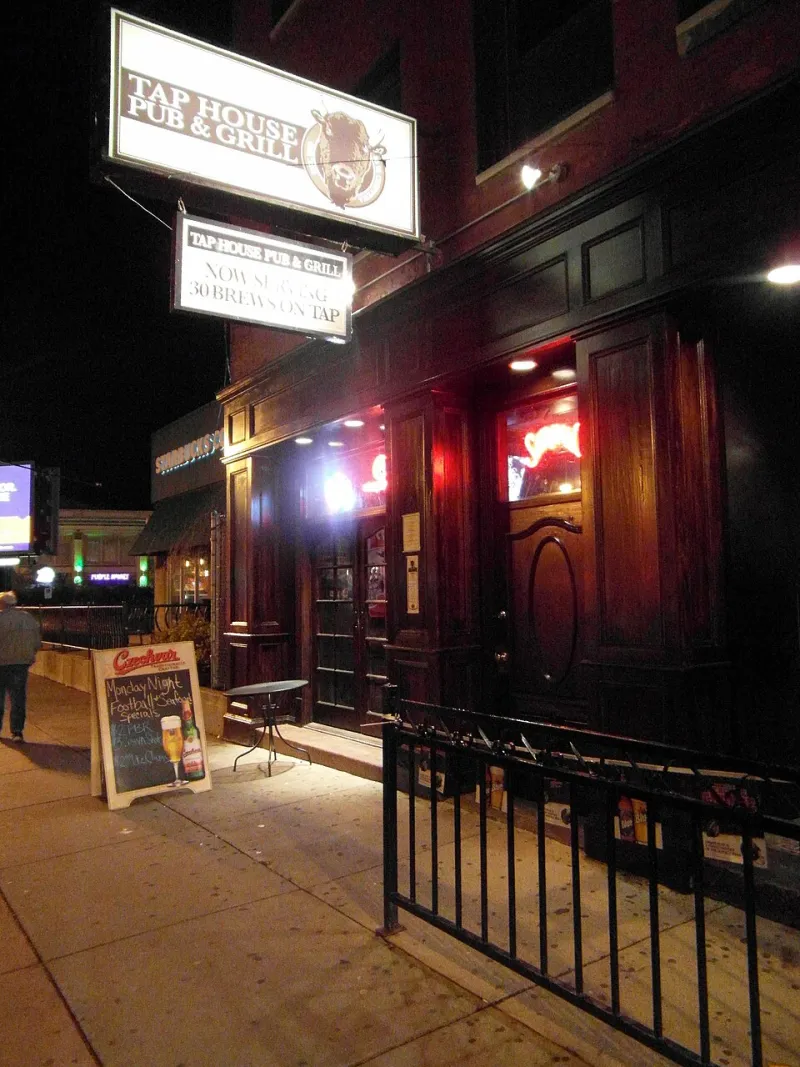
Photo: Reading Tom from Reading, UK, CC BY 2.0, via Wikimedia Commons
Walk into a 300-cap club in Columbus on a Tuesday night and you might find it: a tap handle with a hand-drawn label, the headliner's name scrawled across it in marker-style type. Tonight Only: The Whiskey Hearts Pale. It sounds like a cute gimmick. It's actually a contract.
Over the past two years, band-named house brews have quietly spread from novelty to standard practice at small and mid-sized American venues. The idea is simple — a local brewery makes a signature pour, slaps the act's name on it, and everyone gets a little marketing juice. The money, as usual, is where it gets interesting.
The Handshake Era Is Over
The first generation of these collaborations ran on vibes. A venue booker knew a brewery owner, a band rolled through town, and a keg showed up with their name on it. Nobody signed anything. Nobody got paid.
That's changed. Music lawyers who work with mid-tier touring acts say name-and-likeness agreements for venue beers now land on their desks weekly. The deals are usually one page: the band licenses its name for a single night or a single run of shows, the brewery covers the brew, and the venue handles the pour. What's negotiated — sometimes fiercely — is the split.
"It's not merch," one Nashville-based attorney told us. "A t-shirt is a t-shirt. A beer with your band's name on it touches trademark law, alcohol regulations, and your publishing entity all at once. The bands that get burned are the ones who think it's just a free pint."
What a Keg Actually Pays
Here's the unglamorous math. A typical collaboration might produce two to four kegs of a custom brew for a show night. The brewery's cost on that batch — grain, hops, labor, kegs themselves — can run $400 to $700. The venue sells the pints at standard house prices, usually $7 to $9.
Where the band lands varies wildly. In the loosest deals, they get nothing but exposure and a couple of free pours — a phrase that should trigger every musician's gag reflex. In the middle tier, bands receive a flat licensing fee, typically $150 to $500 for a single-night brew, paid through the venue rather than the brewery. The savviest acts negotiate a per-pint royalty, which sounds great until you realize a Tuesday night might move 80 pints.
"The per-pint deals only make sense if the beer outlives the show," says a booking agent who's brokered several of these. "If the brewery keeps making it after the tour moves on — and some do, quietly, without renegotiating — that's where bands leave real money on the table."
The Tap List Is the New Merch Table
The reason venues love this arrangement is obvious: a band-named beer sells better than the same beer with no story. Fans photograph the tap handle. They tag the venue. It's a merch drop you can drink, and unlike a $40 hoodie, nobody haggles over the price.
For breweries, it's cheap marketing with built-in urgency. A beer that exists for one night creates the same scarcity mechanics as a limited can drop — and we've all seen how those go.
For bands, though, the calculus is trickier. Exposure pays in the currency nobody can spend. A licensing check of $300 is real money to a van-touring act, but it's also your name on a product you didn't make and can't quality-control. If the beer is bad, that's your brand on the bad beer.
Why Some Acts Just Say No
The bands who decline these deals tend to cite the same three reasons. First, exclusivity conflicts: an act with an existing sponsorship can't legally put its name on another alcohol product. Second, brand control — some artists simply don't want their name associated with alcohol at all, a stance that's grown more common as younger acts cultivate broader audiences.
And third, the paper trail problem. Several acts we spoke with mentioned hearing about "their" beer pouring at a venue weeks after they'd played there, with no new agreement in place. Without registration or enforcement, a one-night license can turn into an open tab the band never authorized.
"I asked for the contract and the venue manager looked at me like I'd asked for his house keys," one Pacific Northwest touring musician said. "We drank water that night."
How to Do It Right
The deals that work share a few traits. Everything's in writing, even one page. There's a hard end date on the license. The band gets a flat fee upfront, not just royalties or goodwill. And ideally, the band tastes the beer before their name goes on it — a step so obvious that, according to everyone we spoke with, it gets skipped constantly.
Some of the best collaborations go further: bands that sit in on the recipe, breweries that name the beer after a song instead of the act (sidestepping trademark entirely), venues that cut the band into the tap handle itself, which the act keeps and sells as one-of-one merch later.
The trend isn't slowing down. As venues hunt for revenue beyond the door and bands hunt for revenue beyond streaming, the intersection is a pint glass. Just make sure somebody reads the fine print before the first pour — because in this economy, the band that doesn't negotiate is the band buying its own round.