Vinyl Costs $30, a T-Shirt Costs $40, and a Four-Pack Sells Itself: Inside the Tour-Exclusive Beer Boom
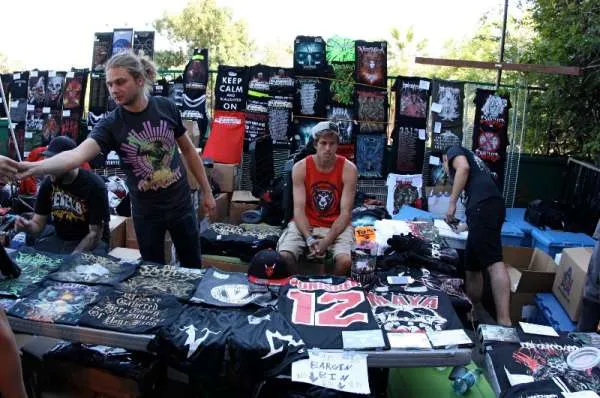
Photo: band selling beer cans at merchandise table at concert venue, via www.unifiedmanufacturing.com
Somewhere between the soundcheck and the encore, a quiet revolution is happening at the folding table by the back wall. The hoodies are still there. So are the vinyl pressings and the tote bags nobody needs. But increasingly, the thing fans are lining up for is ice-cold, tour-exclusive, and brewed about twelve miles from the venue.
Bands selling beer instead of shirts used to be a punchline. Now it's a business model, and for mid-tier acts grinding through 25-city runs in a converted 15-passenger van, the math is hard to argue with.
Why the Can Beats the Cotton
Talk to anyone who's done time managing merch for a touring act and the complaints are identical: shirts are bulky, they eat trunk space, sizes run out by the second week, and the margin — once you factor in printing, blanks, shipping, and the venue's cut — gets thin fast.
Beer flips nearly every one of those variables. A four-pack weighs less than two hoodies. There are no size runs to forecast. And because the beer is brewed locally in each market, there's no freight hauling product across state lines. The band shows up, the brewery delivers, the table sells out.
The economics get better the deeper you look. A screen-printed tee might net an artist $8–12 after everyone takes their slice. A $22 four-pack of a collaboration beer, sold under the increasingly common "merch item" classification, can clear $14–18. Multiply that across a room of 400 people and you're looking at real tour income — the kind that keeps a band on the road for another leg instead of calling it a run in Omaha.
Three Bands, Three Playbooks
We followed three acts at different stages of the trend, and no two are doing it the same way.
The indicator-scene rockers. A five-piece out of the Pacific Northwest with a devoted but modest following partnered with a different brewery in each of their eleven markets. Every stop got a unique recipe — a hazy in Portland, a crisp lager in Boise — with the band's tour artwork on the can. Fans started collecting them like regional variants of a Pokémon card. The band posted the whole run's numbers afterward: beer outsold shirts roughly three to one.
The indie duo gone regional. Two sisters touring the Southwest took the opposite approach — one beer, one recipe, one brewery that follows the tour contractually. Consistency, they say, builds a brand. Fans know exactly what they're getting in Albuquerque and in Tucson, and that repeatability turned the beer into the band's most recognizable product. There's now a waitlist for next year's batch.
The hip-hop collective. A six-member crew playing clubs across the Midwest leaned into the chaos: pop-up collaborations arranged sometimes two weeks out, whatever local brewery was game, whatever the taproom had tank space for. It's scrappy, occasionally chaotic, and it generates exactly the kind of content that fills a tour diary. "The beer is the story," one member told us. "The shirt was never the story."
The Legal Gray Zone Nobody Puts on the Poster
Here's where it gets murky. Alcohol distribution in the US is a patchwork of state-by-state rules, three-tier systems, and licensing requirements that were never designed with a touring band in mind.
The workaround most acts use: the brewery holds the license, produces the beer, and technically sells it to the venue or a licensed distributor. The band's involvement is framed as a collaboration — artwork, naming rights, promotion — rather than a sale. It's the same structure that governs celebrity-owned beer brands, just scaled down to a van and a merch table.
But the rules shift at every border. Some states allow venue-only sales of collaboration product with minimal friction. Others require special event permits. A few effectively make tour-exclusive beer impossible without a distribution deal, which defeats the entire point. Bands we spoke with described hiring a consultant — yes, a beer tour lawyer is a real job now — just to map which states on the routing allow the model and which ones require a fallback plan.
There's also the TTB question. Anything labeled as beer with a band's name on it technically falls under federal labeling rules, and sloppy can designs have caused real headaches. The smart breweries handle compliance as part of the deal; the naive ones learn about it from a cease-and-desist letter.
What the Breweries Get Out of It
It's easy to see this as bands winning and breweries doing them a favor. It's the opposite. A mid-tier act might only pull 150 people a night, but those 150 people are exactly the demographic a local taproom wants through its doors — and they arrive pre-sold on the product.
Breweries describe the collaborations as the cheapest effective marketing they've done. A band with 40,000 monthly listeners posts about your beer to an audience that trusts them implicitly. No ad buy, no influencer rate card. Just a can, a story, and a room full of people already in a good mood.
Several breweries we spoke with now maintain a standing "tour collab" program — reserved tank time, a template contract, and a designer on retainer for can art. One in Denver estimates it hosts a band collaboration every three weeks during touring season.
The Venue Isn't Thrilled
Not everyone's toasting. Venues, already squeezed on margins, watch merch-table beer cannibalize bar sales — the very sales that keep the lights on. Some have responded with exclusivity clauses in their contracts; others now demand a percentage of merch revenue across the board, beer included.
The bands' counter is simple: the fans buying a four-pack were often buying nothing at all, or they're the same people who'd nurse one drink all night either way. Early numbers suggest they're at least partly right — total spend per attendee at beer-collab shows tends to run higher, not lower, because the exclusive product pulls in fans who came pre-loaded and wouldn't have opened a tab.
Where This Goes Next
The trend's trajectory looks a lot like what happened with vinyl: a novelty that hardened into an expectation. Booking agents are already asking about beer collabs during routing conversations. Breweries in secondary markets — Boise, Richmond, Asheville — are positioning themselves as tour-ready partners the way they once competed for tap handles.
And for the bands? The appeal comes down to something no shirt ever offered: the product disappears the night it's bought. Fans drink it, remember it, and come back for the next market's version. Try getting that kind of loyalty from a large gray tee.
The merch table used to be the place where the band's leftovers went to die. Now it's the coldest, most interesting retail space in the building — and the smartest acts in the middle of the bill have figured that out first.