Yeast Doesn't Have Ears: Inside the Breweries Playing Punk to Their Tanks
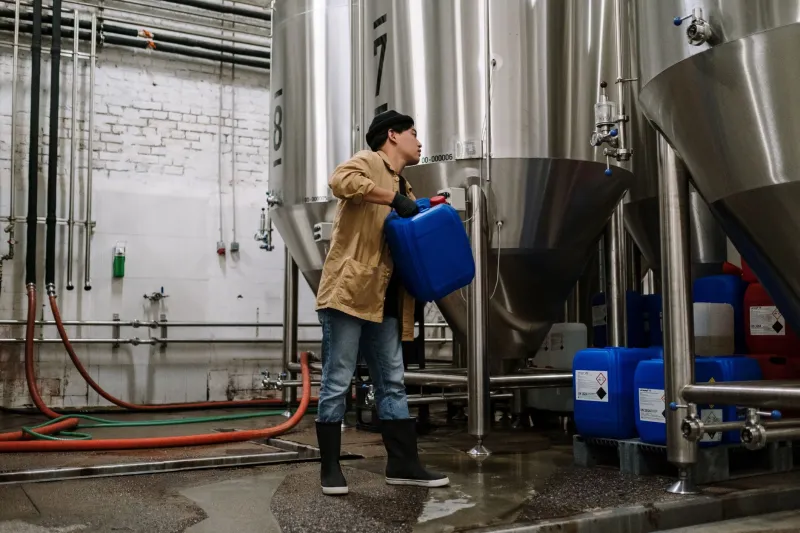
There is a room in a brewery outside Asheville, North Carolina, where the tanks get a different soundtrack than the taproom. No indie playlist, no sports radio bleeding through the wall. Just a small speaker on a shelf, angled at a row of stainless steel, running Brian Eno records on a loop for eleven days straight.
“I know how it sounds,” says Marisol Vance, who has brewed there for nine years. “But I've done the split batch. Same wort, same yeast, same temperature. The tank with the music finishes a touch softer on the palate. Every time.”
She is not alone. Walk into a certain kind of American brewery in 2026 and you'll find fermentation rooms with their own sound systems — sometimes a curated playlist taped to the tank, sometimes a dedicated Bluetooth speaker that nobody is allowed to unplug, occasionally a full-on subwoofer rig that the packaging crew complains about. The practice has picked up a name in trade chatter: sonic aging.
What the claim actually is
Strip away the romance and the pitch is straightforward. Fermentation is a biological event, and biology responds to its environment. Brewers who buy into sonic aging argue that sound waves — the physical vibration, not the vibe — nudge yeast activity in ways that show up in the finished glass: faster attenuation, tighter foam, a rounder mid-palate, a dry finish that reads cleaner than the control batch.
The genre varies wildly by house. Someone in Portland swears by low-volume ambient for lagers and nothing at all for anything with fruit. A cellar lead in Brooklyn runs hardcore punk at moderate volume during the first 48 hours of primary fermentation, then switches to soul. A Denver brewery keeps a running joke that their hazy IPA only attenuates properly to mid-’90s hip-hop, and honestly, they might believe it.
The science, such as it is
The honest answer is that the research is thin. Yeast doesn't have ears. It has no nervous system, no preference, no opinion about the Ramones. What it does have is a cell membrane and a sensitivity to temperature, pressure, and vibration — and vibration is the only one of those a speaker can plausibly touch.
“There's a real field of study around acoustic stimulation and microbial growth,” says Dr. Peter Osei, a food science researcher who has consulted for several mid-size breweries. “It shows up in bioremediation, in fermentation of certain foods. The effects are small and highly dependent on frequency and amplitude. Small does not mean zero.”
Osei's own read is cautious. Vibrations can influence how cells settle and how they interact with the liquid around them, which could nudge flocculation — the clumping that determines how cleanly yeast drops out of suspension. That would show up as clarity and mouthfeel differences. Whether that's what brewers are tasting, or whether they're tasting a batch that got twelve extra minutes of cellar hand attention because it was the “music tank,” he won't say.
The playlist is the least interesting part
Here's the thing the breweries rarely lead with: a fermentation room with a speaker in it is a fermentation room someone is visiting regularly. The same person who swaps the playlist is the one who notices the blow-off bucket needs changing, the one who catches a temperature spike at hour thirty, the one who logs the gravity reading a day early because they were already down there.
“I'd never tell a customer that,” Vance says, laughing. “But yeah. The music tank gets more eyeballs. That's real too.”
Which is not nothing. Consistency in a small brewery is often a story about attention, and attention is a resource you can manufacture with a good story. If a Sonic Youth record on a shelf makes a cellarman walk the floor twice a shift, the beer gets better. Not because of the sound. Because of the walking.
The marketing question
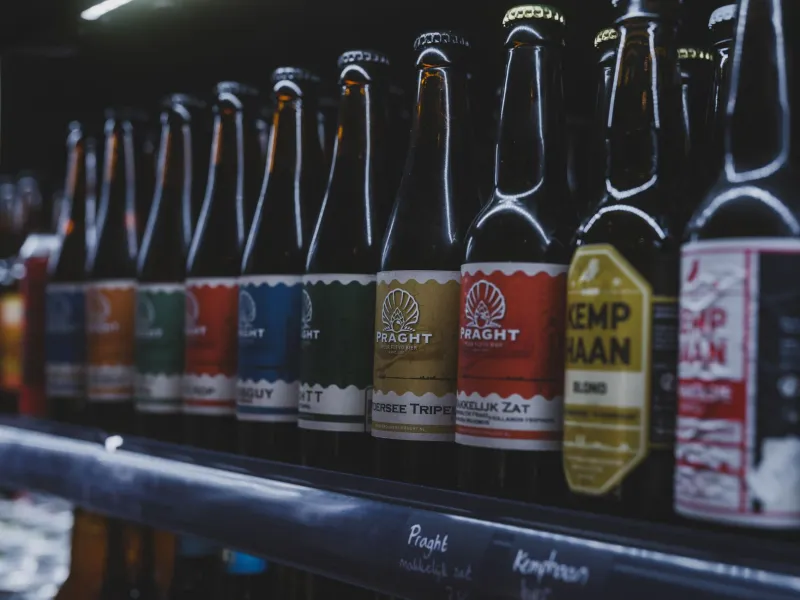
Then there's the label copy. Sonic-aged releases are showing up on shelves with language that flirts with overclaim — tanks “listening,” yeast “responding,” beers “composed” rather than brewed. It sells. Limited runs tied to a specific album or a specific genre move faster than the same liquid with a plain name.
That's where the skepticism gets loud. Brewers who don't do it tend to roll their eyes in a specific way, somewhere between amusement and irritation, because they've watched a trend with a thin evidentiary floor become a differentiator on a shelf tag.
“Nobody's lying about their process,” one brewer in Michigan told me, on the condition that I not name her brewery, which does not do sonic aging. “They're just describing it in a way that implies a mechanism nobody has proven. And the customer can't taste the control batch. That's the whole trick.”
Where it goes from here
What would settle the argument is boring and expensive: repeated split batches, blinded, with gravity and sensory data logged across a hundred fermentations at multiple breweries. Nobody has funded that yet. A few brewers have run informal versions and posted results to group chats, where they are received exactly as well as you'd expect.
In the meantime, the practice keeps spreading, partly because it's cheap, partly because it's fun, and partly because a brewery is a place where people got into this job to make something with their hands and their taste, not to run a spreadsheet. Pointing a speaker at a tank is a small act of personality in a business that increasingly rewards uniformity.
And sometimes, at 2 a.m. on a Wednesday, with a fermentation running hot and nobody else in the building, a cellar hand puts on something loud and stands there for a minute. The beer will taste however it tastes. But the room feels different, and that's a real thing to make.