The Can Is the Canvas: How Six American Breweries Accidentally Built an Art Market

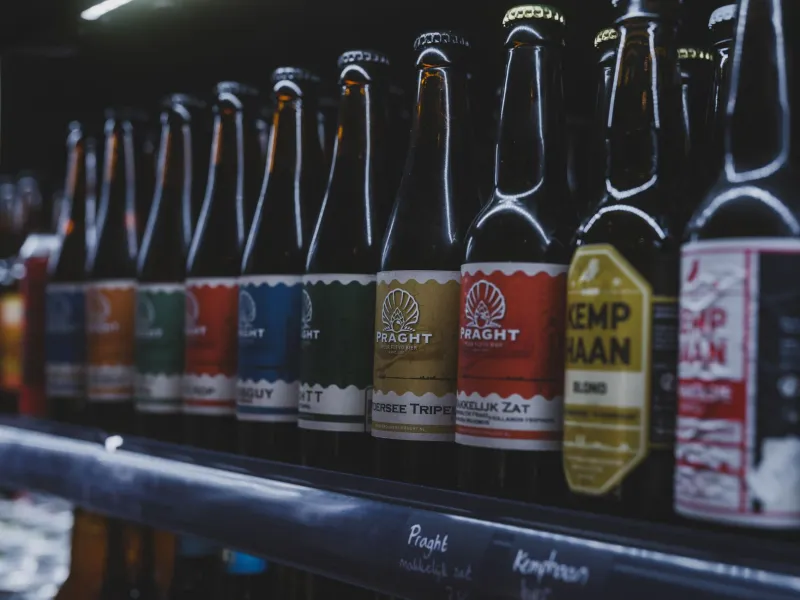
Photo by Photo by Tasha Kostyuk on Unsplash on Unsplash
The line outside a bottle shop in Richmond, Virginia, on a Saturday morning in September 2026 was not for a beer release in the traditional sense. It was for a can. Specifically, it was for four hundred cans of a pale ale with a wraparound label painted by a street artist whose murals run the length of a wall on the city's north side.
Half the people in line had brought sleeves — cardboard tubes, padded envelopes, the occasional rigid mailer. They were buying the beer, sure. They were mostly buying the aluminum.
The commission economy
What used to be a graphic designer's job has become, in a small but growing slice of the American craft market, an artist's commission. Breweries are paying painters and illustrators flat fees in the low four figures for label art, sometimes more when the artist has a name that moves product. Some deals include a royalty on the run. A few include a stipulation that the original artwork ships to the brewery's taproom, where it hangs.
“It's a print run,” says Tessa Oyelaran, a painter in Chicago who has done three can collaborations since 2024. “That's genuinely how I think about it now. They're paying me for an image, they're producing a numbered edition of it, and the edition happens to contain liquid. The fact that the container is a sixteen-ounce can instead of a sheet of cotton rag is almost irrelevant to my process.”
Oyelaran's first collaboration sold out in eleven minutes at the brewery and then reappeared on resale platforms within the week — empty, rinsed, and listed at three times the purchase price. She found this both flattering and unnerving.
Why breweries keep doing it
Because it works, and because the alternative is a shelf crowded with identical-looking IPAs. Breweries have spent the better part of a decade watching their packaging blend into a wall of minimalism and mascot characters. Commissioning a real artist produces something a phone camera likes.
It also builds a customer who behaves differently. An art-driven release doesn't need a festival activation or a tap takeover. It needs a date and a count. The attention is built in, borrowed from the artist's own following, many of whom will show up to a brewery they've never visited for a beer they may not even like.
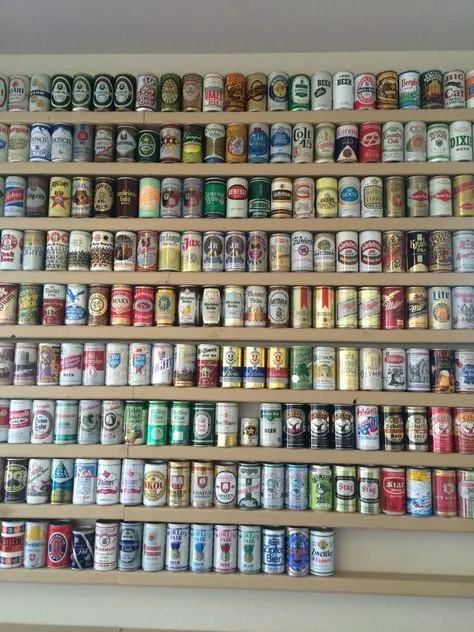
There's a secondary benefit that breweries are quieter about: people keep the cans. A rinsed can on a shelf is a permanent piece of advertising in someone's apartment, doing work no coaster or glass ever could.
The artists' side of the ledger
Not everyone is enthusiastic. The fee structures are inconsistent, and artists new to the format routinely underestimate how their work will be cropped, wrapped, and shrunk to fit a curved surface with a barcode in the corner. A painting that lives on contrast can go muddy on aluminum. Colors shift. Fine linework disappears at arm's length on a cooler shelf.
“I've had two pieces get destroyed by the printing,” says Marcus Ibe, an illustrator in Oakland. “Now I design for the can first and paint the original after. It's backward, but it's the only way to keep the image intact.”
Ibe is also one of several artists who have started asking for written terms on edition size and resale — a request that breweries, who are not art dealers and never signed up to be, tend to meet with a long pause.
The resale problem nobody planned for
Here's where it gets strange. Empty cans are now a market. Not a big one, not a Sotheby's one, but a real one: listings on collector forums, Facebook groups with waitlists, and the occasional bidding war over a misprint. A run of three hundred with a color error becomes, by accident, the most desirable object in the series.
Breweries have responded in three ways. Some ignore it. Some lean in, printing certificates or numbering the cases. And some have started releasing “artist proofs” — a small allocation sold at the taproom, unadvertised, gone before lunch.
That last move is the one that makes gallerists sit up. Numbered, unadvertised, allocation-based, sold to people who intend to never open it: that's not beer retail. That's a print drop with a drinking problem.
What the traditional art world makes of it
Reactions split cleanly. Curators who program public-facing work tend to be amused and a little interested — anything that gets a twenty-six-year-old to pay attention to a painter is, from their view, a net good. Dealers are more circumspect. A can is not archival. Aluminum oxidizes. Labels peel. Sun fades ink. A collector's shelf is not a climate-controlled flat file.
But the access argument is hard to argue with. A can costs what a beer costs. A print costs what a month of rent costs. For a lot of people, the Richmond line was their first art opening, and they didn't even know that's what they'd attended.
The next pour
What happens next probably depends on whether the market holds. Breweries are already talking about multi-artist series, gallery shows tied to release dates, and — inevitably — a whole festival built around can art, which is the most American possible endpoint.
Oyelaran is more interested in the quieter shift. She's been approached by two galleries since her last release, both of whom heard about her through a beer.
“A guy came in with a tote bag full of my cans and asked me to sign them,” she says. “He didn't know anything about my work. He was a beer guy. Now he's a beer guy with two of my paintings, which is a sentence I couldn't have written three years ago.”